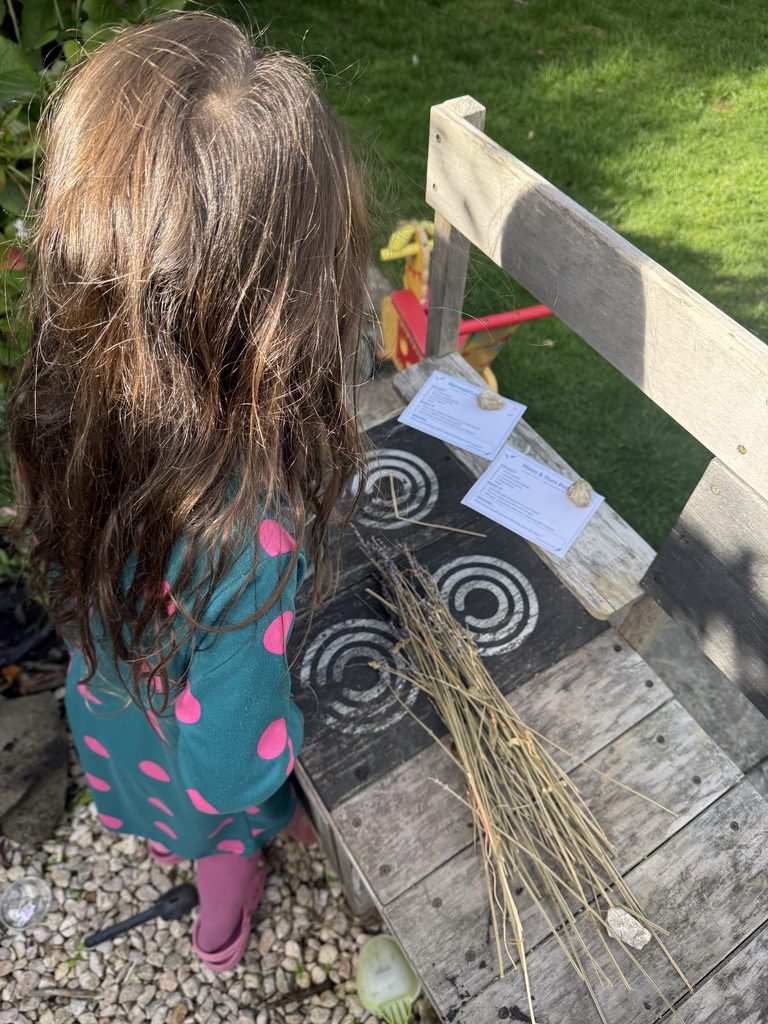
We bought our kids a mud kitchen and, when it first arrived, they absolutely loved it. There was lots of mixing, pouring and making questionable-looking mud pies!
But, as often happens with outdoor toys, the novelty eventually wore off. Now our mud kitchen spends quite a lot of time sitting in the garden without getting much attention.
Rather than letting it become another forgotten garden toy, I thought I would gather together some ideas for giving our mud kitchen a new lease of life. A few extra pieces of equipment, some interesting natural ingredients and a couple of simple activities can completely change how children play with it.
If your mud kitchen has also been sitting unloved in the corner of the garden, hopefully these ideas will help you get a little more use out of it too.
Why are mud kitchens good for children?
One of the things I love about a mud kitchen is how open-ended it is. There is no particular way children have to play with it and no finished result they are supposed to create.
They can make soups, potions, cakes, perfumes or completely imaginary concoctions.
Sensory play
Mud kitchens are brilliant for sensory play.
Children can squish mud, pour water, crush leaves, smell herbs and flowers and experiment with lots of different textures.
They can discover what happens when dry soil is mixed with water, compare the textures of petals and pinecones, or see how ingredients change when they are mashed, stirred or poured.
It is wonderfully messy, hands-on play.
Imaginative play
One minute the mud kitchen can be a café and the next it can be a potion shop, bakery or restaurant.
Children can invent recipes, take orders, serve pretend customers and create their own games.
You may find yourself being offered a surprising number of cups of muddy tea.
Fine motor skills
Pouring from jugs, scooping ingredients, stirring mixtures and using tools such as whisks and tongs are all simple ways for children to practise their hand-eye coordination and fine motor skills.
Experimenting and problem solving
Mud kitchen play naturally encourages children to experiment.
What happens if they add more water?
Can they make their mixture thicker?
Which container holds the most?
Can they get something through a funnel without spilling it everywhere?
They are learning through play without it feeling like learning.
Outdoor play in almost any weather
Another big advantage is that a mud kitchen doesn’t have to be saved for sunny days.
In fact, a little rain can make it even more fun.
Add a puddle suit or waterproofs when it is wet, warm layers in winter, and children can use a mud kitchen throughout much of the year.
Mud kitchen equipment ideas
You don’t need to buy lots of special mud kitchen accessories.
Some of the best equipment can be found in your kitchen cupboards, charity shops or recycling box.
If you’re clearing out old kitchen equipment, it is worth putting a few child-safe pieces aside for outdoor play.
Here are some things you could add:
- Whisk
- Wooden spoons
- Spatulas
- Ladles
- Sieve
- Pots and pans
- Muffin tin
- Potato masher
- Funnels
- Flower pots
- Mixing bowls
- Plastic bottles
- Watering can
- Measuring cups
- Measuring spoons
- Jug
- Bucket
- Small pestle and mortar
- Ice cube trays
- Cupcake cases
- Small trays
- Tongs
- Scoops
- Brushes
- Old baking trays
You certainly don’t need all of these. Sometimes simply adding one or two unfamiliar tools is enough to make an old mud kitchen suddenly interesting again.
Try rotating the equipment rather than leaving everything outside at once. A whisk and muffin tray one week could turn the kitchen into a bakery, while bottles, funnels and a pestle and mortar the next week could transform it into a potion laboratory.
Natural ingredients for mud kitchen play
Collecting the ingredients can become an activity in itself.
We can go for a walk around the garden, park or woodland and see what interesting things we can find.
Depending on the season, you could collect:
- Acorns
- Conkers
- Flower petals
- Dried petals
- Leaves
- Shells
- Herbs
- Cinnamon sticks
- Star anise
- Twigs
- Pinecones
- Dried orange slices
- Grass
- Small stones
- Seeds
- Feathers
You can store dry ingredients in little jars, baskets or containers next to the mud kitchen so the children can choose what they would like to use.
Fresh herbs are particularly lovely because children can tear, crush and smell them before adding them to their creations.
Mint, rosemary and lavender can make a pretend potion smell surprisingly impressive!
A little safety note: always supervise younger children and check that anything collected from outdoors is safe to handle. Mud kitchen creations are for pretend cooking rather than eating, and small natural items can also be a choking hazard for younger children.
My Top Five Mud Kitchen Activities
If simply telling the children to “go and play with the mud kitchen” isn’t working anymore, giving them a small activity or challenge can be enough to get their imaginations going again.
1. Open a mud kitchen café
Turn the mud kitchen into a little outdoor café.
Give the children some pots, pans, bowls and a few natural ingredients and ask them to create a menu.
They could serve:
- Mud pies
- Leaf salad
- Flower soup
- Pinecone cupcakes
- Acorn stew
- Petal tea
You could even make a little menu together on a piece of cardboard.
Then it is your job to sit down and place an order.
This type of play is brilliant because once the idea has been introduced, children will often take it in completely different directions themselves.
2. Make magical potions
Potion-making has to be one of the easiest ways to make a mud kitchen exciting again.
Set out some bottles or bowls along with water and a selection of colourful or scented ingredients.
Petals, herbs, leaves, dried orange slices and cinnamon sticks all work particularly well.
Give the children spoons, funnels and a pestle and mortar and let them experiment.
They could invent a:
- Flying potion
- Invisible potion
- Fairy potion
- Super-speed potion
- Dragon potion
- Sleepy potion
- Happiness potion
Asking them what each ingredient does usually leads to some very imaginative answers.
3. Make mud cupcakes
A muffin tin can provide a surprising amount of entertainment.
Mix soil and water together until it can be shaped, then spoon the mixture into a muffin tray.
The children can decorate their cakes with petals, leaves, acorns, small stones or other natural treasures.
Add some cupcake cases if you have spare ones that you don’t mind getting muddy.
You could even set up an outdoor bakery and have the children make different cakes to order.
4. Create nature soup
Give the children a large saucepan or mixing bowl filled with a little water.
Then challenge them to collect ingredients for their soup.
They might choose grass, petals, leaves, herbs, twigs and stones.
Older children might enjoy giving their soup a name and writing or drawing their recipe afterwards.
Just be prepared to taste-test a lot of imaginary soup.
5. Make mud kitchen perfumes
This is a lovely activity if you have fragrant herbs or flowers growing nearby.
Give the children a small bowl, jar or bottle and let them collect petals and herbs.
They can crush them gently using a pestle and mortar before adding water.
Mint, rosemary, lavender and rose petals are particularly fun to experiment with.
They can then smell their different mixtures and invent names for their perfumes.
You could even make little handwritten labels for the finished bottles.
Easy Mud Kitchen Recipes
One way to encourage play is to give children little recipe cards to follow.
They don’t need to be exact. In fact, the sillier the measurements, the better.
Fairy Soup
You will need:
- 2 handfuls of flower petals
- 3 small leaves
- 1 cup of water
- 1 tiny twig
- A sprinkle of grass
Add everything to a bowl and stir three times clockwise and three times anticlockwise.
Your fairy soup is ready!
Woodland Cupcakes
You will need:
- Mud
- Water
- Leaves
- Acorns
- Petals
Mix the mud with enough water to create a thick mixture.
Spoon into a muffin tin and decorate each cupcake with woodland treasures.
Leave them somewhere sunny to “bake”.
Magic Garden Potion
You will need:
- Water
- Petals
- Mint leaves
- A small piece of dried orange
- A cinnamon stick
Add the ingredients one at a time while making up a magical spell.
Stir everything together and decide what magical power your potion has.
Dinosaur Swamp Soup
- Mud
- Water
- Grass
- Leaves
- Stones
- Twigs
You will need:
Mix everything together in the biggest pot you can find.
Add toy dinosaurs around the edge or let them stomp through the swamp when it is finished.
Flower Fairy Tea
You will need:
- Water
- Flower petals
- Herbs
- Leaves
Add everything to a teapot or jug and give it a good stir.
Pour into little cups and serve at your mud kitchen café.
Make Mud Kitchen Potion Bags as Gifts
I also love the idea of turning mud kitchen play into a little homemade gift.
You could make mud kitchen potion bags for children’s birthdays, party favours, stocking fillers or just as a small surprise.
Fill a paper bag, little box or reusable pouch with a selection of dried ingredients such as:
- Dried flower petals
- Dried orange slices
- Cinnamon sticks
- Star anise
- Dried herbs
- Pinecones
- Acorns
You could then add a little wooden spoon and a homemade potion recipe card.
For example:
Magic Fairy Potion
Add:
1 handful of petals
1 dried orange slice
1 cinnamon stick
3 leaves
A splash of water
Mix everything together while making your biggest magical wish.
This would make such a sweet inexpensive present, particularly for a child who already has a mud kitchen.
You could even create different themed potion bags such as a Fairy Potion Kit, Woodland Potion Kit, Dinosaur Swamp Kit or Christmas Mud Kitchen Kit.
Refreshing an Old Mud Kitchen
The biggest thing I’ve realised is that we probably don’t need a completely new outdoor toy.
We just need to occasionally give the mud kitchen a new purpose.
Changing the equipment, adding some seasonal ingredients or setting up a simple activity can make something the children have walked past for months suddenly feel exciting again.
I’m going to start keeping a little basket of mud kitchen supplies that I can bring outside whenever the kitchen needs a refresh.
Hopefully ours will now get a little more love — and I’ll be drinking imaginary flower tea in the garden again very soon.